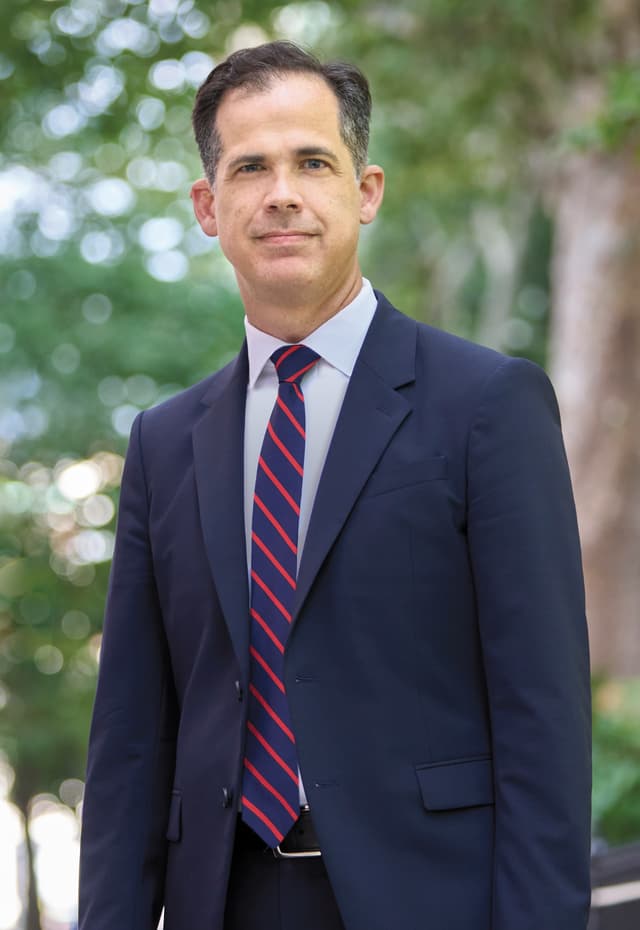
Ryan Bubb
Ivadelle and Theodore Johnson Professor of Law and Business, USC Gould School of Law
Director of Strategic Initiatives, USC Gould School of Law
Director of the Center for Law and Social Science, USC Gould School of Law
Ph.D., Political Economy and Government, Harvard University
J.D., Yale Law School
M.A., Economics, Yale University
B.S., Physics, The College of William & Mary
My research uses economic analysis to understand how legal rules shape behavior—and why well-intentioned policies often fail to achieve their objectives. A recurring theme is the importance of market equilibrium: to understand how a legal rule will affect outcomes, one must consider the incentives it creates for all market participants, not just those the rule is designed to protect.
Corporate Governance. Much of my work examines how shareholders actually exercise their governance rights. With Emiliano Catan, I used machine learning to analyze millions of mutual fund votes and discovered that funds organize into distinct “parties”—what we call the Traditional Governance Party, the Shareholder Reform Party, and the Shareholder Protest Party—each following a distinctive philosophy of corporate governance and the shareholder's role. This revealed a structure to shareholder governance that scholars had missed. I have also examined whether corporate social responsibility can be pursued through shareholder governance, analyzing recent proposals that would have managers maximize shareholders' welfare rather than shareholder value. My current projects include developing a general framework for analyzing shareholder rights in control transactions and examining how fiduciary duties can be designed to strengthen shareholders' bargaining position. I am also working on Delaware's oversight doctrine, arguing that the seminal Caremark decision conflates two distinct purposes—policing agency costs and ensuring legal compliance—and that this conflation has produced a dysfunctional jurisprudence.
Household Finance. A second line of research applies behavioral contract theory to consumer financial products. In work with Patrick Warren on retirement plan design, I showed that labor market competition leads employers to design plans that cater to workers' mistakes rather than correct them. Related work with Oren Bar-Gill examines credit card pricing and the effectiveness of the CARD Act, and work with Alex Kaufman shows how mutual ownership can mitigate firm incentives to exploit consumer biases through contract design.
Financial Regulation. A third line of research examines the regulation of financial institutions and markets, with a focus on how behavioral factors affect regulatory design. In work with Prasad Krishnamurthy on housing bubbles, I argued that incentive-based reforms like risk retention fail because they assume rational behavior by sophisticated parties. But in a bubble, irrational exuberance is marketwide—lenders and securitizers are just as eager to take on excessive risk as borrowers. Related work with Alex Kaufman challenges the influential view that securitization led to lax mortgage underwriting through a moral hazard channel. We show that credit score cutoff rules—which produced the key evidence cited for this view—actually originated with underwriting guidelines that Fannie Mae and Freddie Mac imposed on lenders, not from rules of thumb followed by securitizers. Loan-level data confirm that lenders change their screening at these cutoffs even when the probability of securitization does not change, invalidating the identification strategy underlying the moral hazard claim. This work suggests that post-crisis reforms premised on securitization-induced moral hazard may have been based on a misreading of the evidence. Other work with Marcel Kahan proposes a new approach to the Volcker Rule that works through regulating banker compensation rather than attempting to define and ban proprietary trading.
Regulatory Theory. I have also written on broader questions in regulatory theory, often challenging conventional wisdom about optimal legal design. Work with Giuseppe Dari-Mattiacci challenges the conventional view of legal uncertainty as purely distortionary, showing how uncertainty can improve incentives by freeing heterogeneous actors from rigid adherence to ill-fitting legal standards. The paper identifies two mechanisms through which simple standards can harness uncertainty to produce beneficial differentiation: a "smoothing channel" where uncertainty breaks up inefficient bunching of behavior at a known standard, and a "projection channel" where individuals rationally form differentiated beliefs about what the standard requires based on their own characteristics. Work with Patrick Warren explains why presidents appoint ideological bureaucrats to regulatory agencies and how centralized regulatory review complements rather than counteracts this practice. A widely cited article with Richard Pildes offers a fundamental critique of the "nudge" approach to behavioral law and economics: that BLE's political commitment to "freedom of choice" has constrained its policy analysis in two costly ways. First, BLE artificially excludes traditional regulatory tools like direct mandates, even when its own evidence suggests that nudges will fail. Second, the supposedly light-touch defaults so central to BLE are not as choice-preserving as advertised; for many individuals, they function as effective mandates. The mistaken belief that people can always rationally opt out has led policymakers to set these powerful defaults at the wrong levels.
International Law & Development. Earlier work examined international institutions, including the economics of international refugee law with Michael Kremer and David Levine, and the strategic dynamics of bilateral investment treaties with Susan Rose-Ackerman. Field research in West Africa used a regression discontinuity design to show that informal norms, not state law, are the primary determinant of property rights institutions.
Before joining USC, I taught at NYU School of Law for fifteen years, most recently as the Robert B. McKay Professor of Law. Before entering academia, I served as a Policy Analyst at the Office of Information and Regulatory Affairs (OIRA) during the Obama administration and as a Senior Researcher for the Financial Crisis Inquiry Commission, the congressionally appointed panel charged with investigating the causes of the 2008 financial crisis.